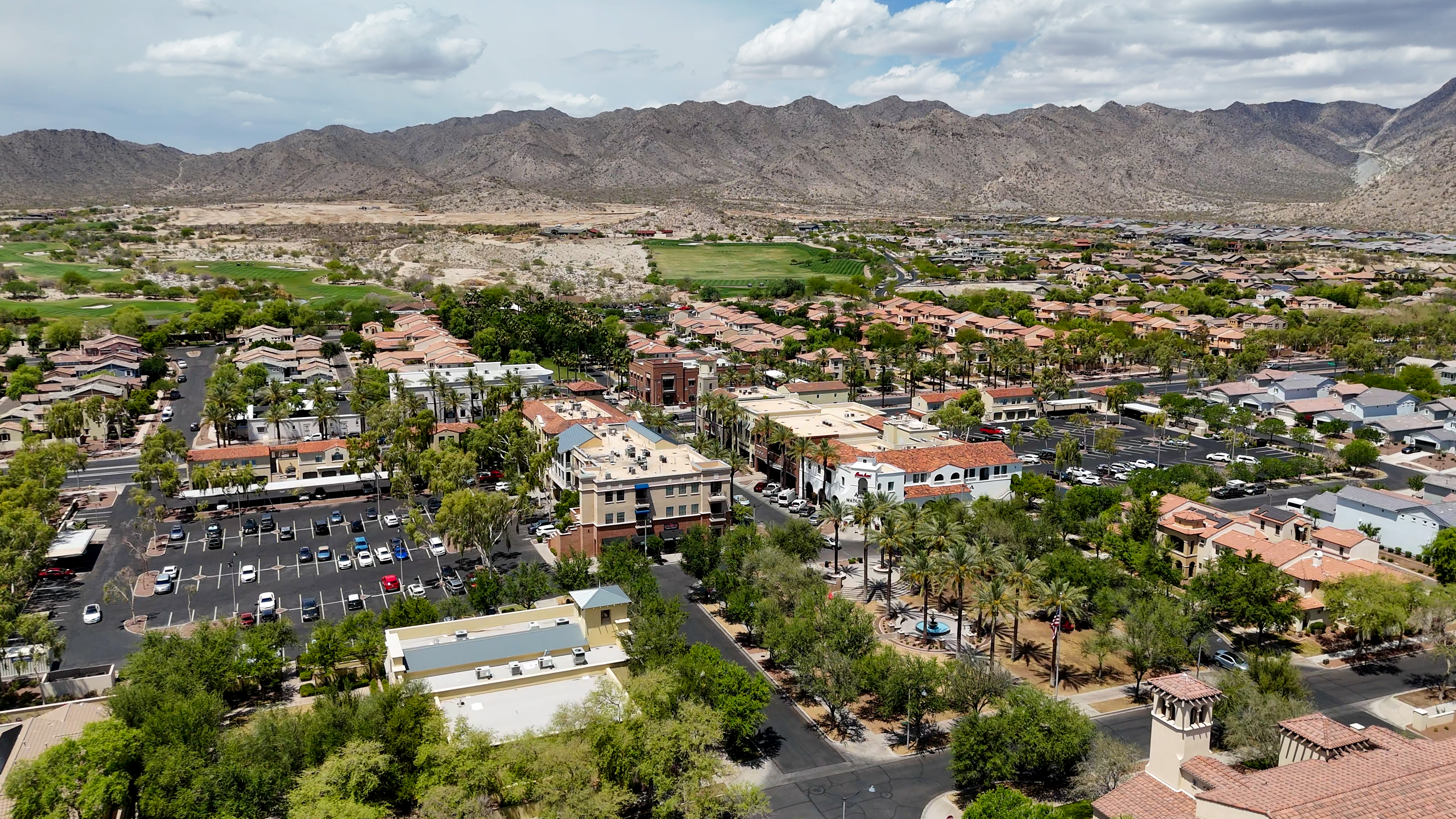
There are places in the Phoenix metro area that surprise people — communities that don’t look like much on a map but feel entirely different the moment you drive through them. Litchfield Park is one of those places. Wide, tree-lined streets. Mature landscaping that takes decades to grow. A genuine sense of history and intentional design that you simply don’t find in newer developments. And at the center of it all, one of Arizona’s most storied and beloved institutions: the Wigwam Resort.
If you’ve started researching Litchfield Park real estate and want a complete, honest picture of what it’s like to actually live here — not just what the brochure says — this guide is for you. I’m Faith Vance, a REALTOR® who has worked in this community for years. I know these streets, these homes, and this neighborhood deeply. Let me walk you through everything.
Where Is Litchfield Park, and Why Does Location Matter?
Litchfield Park sits in the West Valley of Phoenix, roughly 20 miles west of downtown Phoenix and about 8 miles west of the I-17/I-10 interchange. It’s bordered by Goodyear to the south and west, Avondale to the east, and Surprise to the north. Peoria, Glendale, and the broader metro are all easily accessible from here.
What makes the location particularly compelling right now is the growth happening all around it. The Loop 303 corridor has become one of the fastest-growing employment zones in Arizona, with massive industrial, tech, and logistics developments bringing high-paying jobs to the West Valley. Buyers who purchase in Litchfield Park today are positioning themselves at the geographic center of where growth is happening — while still living in a community that feels nothing like the construction zones surrounding it.
Commute times to major Phoenix-area employment centers are manageable: roughly 25–35 minutes to downtown Phoenix, 30–40 minutes to the Sky Harbor area, and 20–30 minutes to many of the major hospital and medical campuses in the West Valley. The I-10 is your primary artery, and Loop 303 access is quick from anywhere in the city.
The History That Makes Litchfield Park Unique
Most Arizona cities were platted, built, and populated in rapid succession over the last few decades. Litchfield Park is different. Its origins trace back to 1916, when the Goodyear Tire and Rubber Company acquired thousands of acres in the West Valley to grow long-staple cotton for tire cords during World War I. The cotton farm was a massive operation, and Goodyear needed a way to house and entertain executives who traveled out from Akron, Ohio to oversee operations.
That need gave rise to the Wigwam — originally a small executive guest ranch built in 1929, and later expanded into the full-scale resort it is today. The town that grew up around it was named Litchfield Park after Paul Weeks Litchfield, a Goodyear president who shaped both the company and the community. Unlike other Arizona towns that simply grew organically (or quickly), Litchfield Park was thoughtfully designed from the beginning: wide lots, mature trees, architectural standards, and a sense of quiet permanence baked into the community’s original vision.
That history shows. Walk through any established neighborhood in Litchfield Park and you’ll feel a texture and character that money alone can’t manufacture. It’s the product of decades.
The Wigwam Resort: Your Neighborhood Landmark
You can’t talk about Litchfield Park without talking at length about the Wigwam Resort — because for residents, it’s not just a nearby attraction. It’s part of the neighborhood fabric.
Today, the Wigwam holds AAA Four Diamond status and is one of the only true destination resort hotels in the Phoenix metro area that sits directly within a residential community. The resort’s grounds are immaculately maintained, and the aesthetic standards set by the Wigwam extend outward into the surrounding streets. When you live near the Wigwam, your neighborhood is a resort neighborhood — and that changes everything from property values to day-to-day quality of life.
What many buyers don’t realize until they move here is that the Wigwam offers memberships to the public — meaning you don’t have to book a hotel room to access its world-class amenities. There are three primary membership types available to Litchfield Park residents:
Golf Membership at the Wigwam
The Wigwam is home to two championship golf courses: the Gold Course and the Red/Blue Course. Both were designed by the legendary Robert Trent Jones Sr. and have hosted professional tournaments throughout their history. For serious golfers, having access to courses of this caliber without leaving your own neighborhood is a genuinely extraordinary benefit. If you live in central or northern Litchfield Park, tee time might be a short golf cart ride away.
Tennis Membership at the Wigwam
The resort’s tennis facilities offer multiple courts with organized programming for players at every level. Whether you’re a competitive tournament player or someone who enjoys a weekly doubles match, the Wigwam’s tennis program gives you access to instruction, leagues, and well-maintained courts that rival anything else in the Valley. A tennis membership here means you’ll never have to drive to another facility.
Social Membership at the Wigwam
Not a golfer or a tennis player? The social membership is perhaps the most popular option for everyday Litchfield Park residents. It provides access to the Wigwam’s restaurants, pools, fitness facilities, and a calendar of social events — seasonal gatherings, holiday parties, member dinners, and exclusive experiences. For many families and couples who call Litchfield Park home, the social membership becomes the social infrastructure of their lives here — the place where you see your neighbors, celebrate milestones, and enjoy resort-quality amenities you’d normally only experience on vacation.
Taken together, the Wigwam memberships transform Litchfield Park from a nice neighborhood into something qualitatively different: a community where world-class recreation and social life are available at your doorstep.
Neighborhoods and Home Styles in Litchfield Park
Litchfield Park is a relatively compact city — it covers only about 3.5 square miles — which means almost everything is close to everything else. But within that footprint, there’s real variety in the types of homes you’ll find.
The original Litchfield Park estates are the most iconic: large lots, mature trees, custom architecture, and a sense of timelessness that sets them apart from anything built in the last 20 years. Many of these homes sit on lots of half an acre or more, with prices typically starting in the $700s and climbing well into the millions for the most significant estates.
There are also newer master-planned neighborhoods within Litchfield Park’s boundaries — updated amenities, newer construction standards, and HOA-maintained common areas — while still benefiting from the city’s overall character and location. And then there are the custom and semi-custom homes on larger parcels throughout the city, including homes with RV garages, horse privileges, private pools, and the kind of outdoor entertaining spaces that Arizona’s climate makes so appealing.
Schools in Litchfield Park
Families considering Litchfield Park will find the educational landscape quite strong. The primary school district serving the area is the Litchfield Elementary School District, which has consistently earned strong reviews from parents and strong ratings from state assessments. For high school, students are served by the Agua Fría Union High School District, which includes Millennium High School — recognized for its academic programs, arts, and athletics. There are also strong private and charter school options throughout the West Valley.
Lifestyle and What Daily Life Actually Looks Like
The Litchfield Park Village is the city’s charming downtown core: a small but delightful commercial district with local restaurants, boutique shops, and the kind of walkable street life you’d expect in a much older American city. On weekend mornings especially, it becomes the gathering point for long-time residents and newcomers alike.
The White Tank Mountain Regional Park is a short drive away, offering miles of hiking and biking trails. The Estrella Mountain Regional Park is also nearby. For everyday shopping and dining, proximity to Goodyear, Avondale, and the Verrado corridor means virtually any national retailer or restaurant concept is within 10–15 minutes — while Litchfield Park itself maintains a quiet, residential character without big-box stores inside city limits.
Litchfield Park vs. Verrado: Two Different Visions of West Valley Living
Many buyers who research Litchfield Park also look at Verrado, the award-winning master-planned community located just to the west in Buckeye. Litchfield Park is historic and established — its trees are decades old, its character developed over generations, and it’s a real city with real history. Buying here means joining something that already exists. Verrado is thoughtfully designed and master-planned, with a beautiful Main Street, new construction options, and a community culture built around walkability and neighborhood events. Both are excellent choices — it depends on which version of West Valley living fits your life.
For a deeper comparison, read: Litchfield Park vs. Verrado — Which Community Is Right for You?
The Litchfield Park Real Estate Market: What to Expect
Litchfield Park’s real estate market is defined by the relative scarcity of inventory. With only about 3.5 square miles of land, the city has a finite number of homes — and turnover is lower than in many other West Valley communities because residents tend to stay. When a well-priced home comes to market, it often moves quickly.
Pricing spans a wide range: entry-level homes in newer neighborhoods within city limits can be found in the $500s to $700s. Original estate properties typically start in the $700s to $900s and climb into the $1M–$2M+ range for the most exceptional properties. What makes Litchfield Park a strong long-term value proposition is the combination of limited supply, a resort-adjacent address, excellent schools, and an established community identity that newer developments simply can’t replicate overnight.
Is Litchfield Park Right for You?
Litchfield Park isn’t for every buyer — and that’s a feature, not a bug. It’s a city that rewards people who appreciate history, character, and community over pure newness. Buyers who want walkability and a neighborhood with soul. Buyers who understand that a resort as your neighbor is genuinely extraordinary.
If that sounds like you, let’s talk. I’ve sold homes throughout Litchfield Park and I know this community at a level that goes well beyond what you can find in an online search. Call or text me at 602-882-6045, or reach out through my contact page. Let’s find your place in Litchfield Park.